
How Unresolved Trauma Affects Parenting and Children

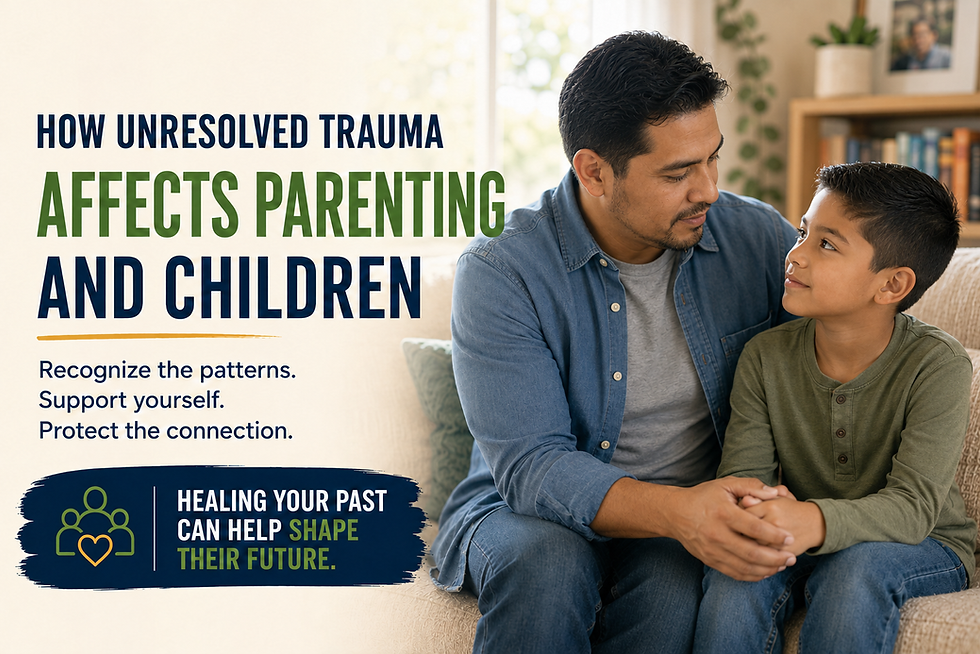
Parenting can bring unexpected parts of our past to the surface.
A child cries, and we feel an urgent need to make the crying stop. A young child refuses to cooperate, and frustration quickly becomes anger. A mistake that should feel manageable suddenly feels like a crisis. A child asks for reassurance, but instead of feeling patient and connected, we feel overwhelmed, uncomfortable, or emotionally distant.
Afterward, we may wonder:
“Why did I react so strongly?”
“Why was it so hard for me to stay calm?”
“Why does my child’s behavior feel so personal?”
“Am I repeating something from my own childhood?”
Every parent has difficult moments. Exhaustion, financial pressure, relationship challenges, work responsibilities, limited support, and the daily demands of raising children can stretch anyone’s patience. One intense reaction does not mean a parent has unresolved trauma.
Sometimes, however, recurring parenting struggles are connected to experiences that happened long before a person had children. Past trauma can influence how adults understand safety, respond to conflict, manage emotions, establish boundaries, and connect with the people they love.
Recognizing that possibility is not about blaming parents. It is about helping parents understand their reactions, care for their own well-being, and create greater emotional safety for their children.
What Unresolved Trauma Means
“Unresolved trauma” is a commonly used phrase rather than a formal mental-health diagnosis. It generally refers to the lasting effects of a distressing experience that continues to influence a person’s emotions, thoughts, relationships, behavior, or physical responses.
Trauma may be associated with a single event, such as an accident, assault, sudden loss, natural disaster, or exposure to violence. It can also develop through experiences that occur repeatedly, including abuse, neglect, abandonment, instability, humiliation, family conflict, or living in an environment where safety and emotional support were uncertain.
The Substance Abuse and Mental Health Services Administration explains that trauma can result from an event, series of events, or circumstances experienced as physically or emotionally harmful or threatening, with lasting effects on a person’s functioning and well-being.
This definition matters because trauma is not determined only by how an experience appears from the outside. Age, developmental stage, available support, previous experiences, personal vulnerability, and the sense of safety surrounding the event can all influence its impact.
Two people can live through similar circumstances and respond differently. That does not mean one person is stronger than the other. It means human beings experience and process stress in individual ways.
Not Every Difficult Experience Is Traumatic
Children and adults encounter stress throughout life. Frustration, disappointment, change, conflict, and uncertainty are not automatically traumatic.
In manageable amounts, stress can help children develop coping skills. Waiting for a turn, adjusting to a new routine, losing a game, resolving a disagreement, or working through a challenging task can all become healthy opportunities for growth when children have appropriate support.
The concern is not that children experience any stress. The concern is when an experience is frightening, overwhelming, prolonged, or repeated and the child does not have enough safety or support to recover.
A difficult move may be manageable for one child who feels prepared, heard, and supported. For another child, the same move may feel destabilizing because it follows other losses or removes an important source of security.
A disagreement between adults does not automatically traumatize a child. However, frequent explosive conflict, threats, violence, or an unpredictable home environment can create ongoing fear and uncertainty.
This distinction allows parents to take children’s experiences seriously without treating every disappointment as trauma. Children do not need a life without difficulty. They need responsive adults who help them feel safe, understand what is happening, express their emotions, and recover from stressful experiences.
Why Childhood Experiences Can Continue Into Adulthood
Children depend on adults to help them understand danger, regulate distress, and return to a sense of safety. Their ability to manage powerful emotions develops gradually through repeated experiences of being comforted, protected, guided, and understood.
When that support is unavailable or inconsistent, children may develop other ways to cope. They might become highly alert to changes in an adult’s mood. They may hide their feelings, avoid asking for help, work constantly to please others, or try to control their surroundings.
These responses may have been protective during childhood. A child who could recognize tension early may have had more time to avoid conflict. A child who stayed quiet may have drawn less unwanted attention. A child who kept everyone happy may have experienced fewer angry reactions.
The challenge is that protective patterns can continue after the original circumstances have changed.
The child who learned never to depend on anyone may become an adult who struggles to ask for support. The child who monitored every shift in a parent’s mood may become an adult who is constantly prepared for something to go wrong. The child who was expected to suppress emotions may become a parent who feels uncomfortable when their own child cries or becomes angry.
Our related article, How Trauma Affects the Developing Brain in Children, looks more closely at how stressful experiences and supportive relationships can influence a child’s developing stress-response system.
These early experiences do not determine a person’s future. They can, however, help explain why certain reactions feel automatic or difficult to change.
Why Parenting Can Activate Old Experiences
Parenting regularly involves vulnerability, dependency, strong emotions, uncertainty, and loss of control. These are also common themes in many traumatic experiences.
A crying baby may create intense distress for a parent who was punished for expressing needs. A child’s dependence may feel uncomfortable to someone who was forced to become self-sufficient too early. A disagreement with an older child may feel threatening to a parent who grew up in a home where conflict led to rejection, humiliation, or violence.
Parents may also feel grief when they provide their children with something they did not receive. Comforting a frightened child can bring awareness of how alone they once felt. Celebrating a child’s accomplishments may highlight how rarely their own efforts were recognized.
These reactions can be confusing because the current parenting moment may not appear serious enough to explain the intensity of the emotion. Our article Why Some Parenting Moments Feel Bigger Than They Should explores why a parent’s reaction may sometimes be connected to more than the immediate situation.
Signs Unresolved Trauma May Be Affecting a Parent
Unresolved trauma can look different from one person to another. Some parents remember exactly what happened to them. Others have limited memories but recognize recurring emotional or relationship patterns.
Possible signs include:
Reactions that regularly feel much larger than the parenting situation
Feeling constantly alert to danger or expecting the worst
Becoming overwhelmed by crying, conflict, noise, or emotional needs
Withdrawing or shutting down when a child is upset
Struggling to trust other people with the child
Feeling an intense need to control routines, behavior, or outcomes
Avoiding necessary boundaries because conflict feels unsafe
Experiencing persistent shame or believing every mistake proves parental failure
Having intrusive memories, nightmares, or strong reactions to reminders of the past
Using alcohol, drugs, food, work, or constant distraction to escape distress
Experiencing ongoing sleep problems, tension, anxiety, or difficulty concentrating
These signs do not confirm that someone has unresolved trauma. They can also be associated with chronic stress, anxiety, depression, sleep deprivation, physical health conditions, substance use, or other concerns.
Post-traumatic stress disorder is also a specific diagnosis, not another name for every lasting response to adversity. The National Institute of Mental Health identifies symptom groups that can occur with PTSD, but only a qualified mental-health professional can evaluate and diagnose the condition.
The purpose of recognizing patterns is not to place a label on a parent. It is to notice when something from the past may be interfering with the relationship a parent wants to build in the present.
Once parents begin recognizing those patterns, the next question is how their reactions may be experienced by their children.

Helping Yourself While Supporting Your Children
Recognizing that past trauma may be influencing parenting can feel uncomfortable. It may bring grief for what happened, regret about previous reactions, or fear about how children have been affected.
Those feelings are understandable, but awareness should lead toward action rather than shame.
Parents do not need to uncover every memory or understand their entire history before they can begin responding differently. Change often starts with noticing patterns, slowing down reactions, and creating more emotional safety in everyday family life.
Learn to Recognize Your Parenting Triggers
A trigger is a reminder that activates an emotional or physical response connected to an earlier experience. The reminder may be obvious, or it may seem unrelated to the past.
Common parenting triggers can include:
A child crying for an extended period
Being ignored or told “no”
Loud noises or disorder
A child making mistakes
Sibling conflict
A child expressing anger
Feeling watched or judged by other adults
Losing control of a schedule
A child needing repeated reassurance
Physical affection or emotional closeness
A child reaching the age when something painful happened to the parent
Begin by noticing what happens before a strong reaction.
What was your child doing? What meaning did you assign to the behavior? What did you notice in your body? Did your breathing change? Did your muscles tighten? Did you feel an urgent need to control, escape, argue, or make the emotion stop?
This is not an exercise in blaming yourself. It is a way of identifying the point where you may still have an opportunity to choose your response.
Some parents find it helpful to write down recurring situations. Over time, patterns may become clearer.
Pause Before Responding
When a parent is emotionally activated, immediate reactions can be driven by fear, anger, or the need to regain control.
A brief pause can interrupt that automatic response.
Depending on the child’s age and immediate safety, a parent might:
Place both feet on the floor and take several slow breaths
Relax the jaw, shoulders, and hands
Name the feeling silently: “I am becoming overwhelmed”
Remind themselves: “This is a difficult moment, not an emergency”
Lower their voice intentionally
Tell the child, “I need a moment to calm my body, and then we will talk”
Ask another trusted adult to step in briefly when appropriate
Pausing does not mean ignoring unsafe behavior. If a child could hurt themselves or someone else, safety comes first. The goal is to address the situation without allowing the parent’s distress to determine the intensity of the response.
Separate the Present From the Past
During a triggering moment, it can help to identify what belongs to the current situation and what may belong to an earlier experience.
A parent might remind themselves:
“My child is disappointed. They are not rejecting me.”
“My child’s crying is communication. It is not an attack.”
“This mistake does not mean I have failed.”
“I can set a boundary without frightening my child.”
“My child is allowed to have feelings about my decision.”
These reminders do not make difficult behavior disappear. They help the parent respond to the child standing in front of them rather than to someone or something from the past.
Use Coping Strategies That Support Long-Term Well-Being
Parents need ways to manage stress that restore rather than numb them.
Sleep, movement, time outdoors, supportive relationships, nutritious meals, quiet reflection, creative activities, and realistic breaks can all contribute to emotional well-being. These practices are not substitutes for professional treatment when treatment is needed, but they can strengthen a parent’s ability to manage daily stress.
Some coping habits provide temporary relief while creating additional difficulties. Alcohol, drugs, compulsive spending, emotional eating, overworking, or constant digital distraction may help someone avoid distress briefly without addressing what is happening underneath.
Our article Healthy vs. Unhealthy Coping Strategies: Finding Balance in Stress Management can help parents examine whether their current coping patterns are supporting or limiting them.
Create Predictability Without Trying to Control Everything
Predictable routines can help children feel secure and can reduce stress for parents.
Regular patterns around waking, meals, school, transitions, and bedtime give children a clearer sense of what comes next. Expectations are easier to follow when they are communicated calmly and consistently.
Predictability is different from rigid control. Families need flexibility for illness, special events, changing schedules, and ordinary life.
The goal is not to make every day identical. It is to create enough consistency that children generally understand the family’s expectations and trust that adults will guide them through changes.
Make Room for Children’s Emotions
Children should be allowed to experience disappointment, frustration, sadness, fear, and anger. Accepting an emotion does not require accepting every behavior.
A parent can say:
“You are angry that screen time is over. The answer is still no.”
“You wanted to stay at the park. It is hard to leave when you are having fun.”
“You may be upset, but I will not let you hit.”
“You made a mistake. We can figure out what to do next.”
These responses combine emotional validation with appropriate boundaries.
Parents who were discouraged or punished for expressing feelings may find this difficult. It can take practice to remain present with a child’s emotion without trying to dismiss it, solve it immediately, or give in to make it stop.
Show Children That Adult Emotions Are Not Their Responsibility
Children may notice when a parent is worried, sad, frustrated, or tired. Parents do not need to pretend they never experience difficult emotions.
What children need is reassurance that adults remain responsible for managing adult feelings.
A parent might say:
“I am feeling stressed, but you did not cause it.”
“I need a few quiet minutes. You are safe, and I will come back.”
“I became too angry and yelled. That was my responsibility.”
“You do not need to make me feel better. I am taking care of myself.”
These messages relieve children of a burden they were never meant to carry.
Repair After Difficult Parenting Moments
Even thoughtful, loving parents lose patience, misunderstand their children, or respond in ways they regret.
Repair teaches children that conflict does not have to end connection.
An effective repair includes:
Naming what happened without making excuses.
Taking responsibility for the adult’s behavior.
Acknowledging how the interaction may have affected the child.
Restating the boundary if one is still needed.
Explaining what the parent will try to do differently.
For example:
“I yelled when you did not put your shoes on. It was okay for me to remind you that we needed to leave, but it was not okay for me to frighten you. I am sorry. Next time, I am going to pause and lower my voice. We still need to leave on time, so let’s make a plan together.”
An apology does not erase every difficult moment. Repeated repair, followed by meaningful changes in behavior, helps restore trust.
Build Support Around Your Family
Trauma often encourages isolation. Parents may believe they should handle everything alone or fear being judged if they admit they are struggling.
Support can come from trusted family members, friends, other parents, community organizations, faith communities, parenting programs, or qualified professionals.
The right support should reduce shame, respect appropriate boundaries, and help the parent make healthier decisions. Our article The Power of Support Groups: A Key Tool for Managing Stress and Enhancing Emotional Well-Being explains how shared experiences and community connection can help people feel less alone.
Asking for help is not evidence that a parent has failed. It is one way of protecting both the parent’s well-being and the family relationship.
When to Seek Professional Mental-Health Support
Self-awareness and parenting education can be valuable, but they are not replacements for mental-health treatment.
Consider contacting an independent licensed mental-health professional if past experiences or current symptoms are interfering with:
Personal safety
Sleep or physical well-being
Work or daily responsibilities
Close relationships
The ability to care for children consistently
The ability to manage anger or emotional reactions
Alcohol or substance use
Recovery from intrusive memories, nightmares, panic, or persistent distress
A qualified professional can assess what is happening, rule out other possible concerns, and discuss appropriate options. Parents do not need to diagnose themselves or wait until the family reaches a crisis.
If there is an immediate danger of someone being harmed, seek emergency assistance immediately.
When Your Child May Need Additional Support
Children experience difficult emotions and behavioral changes for many reasons. A short period of distress does not automatically indicate trauma or a mental-health condition.
Additional evaluation may be appropriate when changes are intense, persistent, worsening, or interfering with the child’s daily life. Possible concerns include:
Ongoing sleep disruption
Significant changes in eating
Persistent anxiety or fear
Frequent emotional outbursts
Withdrawal from family or friends
Loss of previously developed skills
Difficulty attending school or participating in normal activities
Repeated physical complaints without an identified explanation
Behavior that creates safety concerns
Parents can begin by speaking with the child’s healthcare provider or another qualified professional who can recommend appropriate next steps.
How Building Bright Futures Supports Parents and Families
Building Bright Futures does not provide trauma therapy or individual mental-health treatment.
BBF supports parents through education, practical resources, workshops, support groups, and community-based programs. Our goal is to help parents better understand child development, recognize the needs beneath behavior, build emotionally safe relationships, and feel less isolated while navigating the challenges of raising children.
We place particular emphasis on the earliest years of development while supporting parents of children through age 12.
Families can benefit from BBF while also working with independent healthcare or mental-health professionals when clinical care is needed. These forms of support serve different purposes and can complement one another.
Frequently Asked Questions
Can unresolved trauma make someone a bad parent?
No. A history of trauma does not determine whether someone is a good or bad parent. It may contribute to reactions or patterns that require attention, but parents can develop greater awareness, learn new skills, repair relationships, and seek support.
Does a strong reaction always mean I was triggered by trauma?
No. Strong reactions can result from exhaustion, chronic stress, anxiety, depression, physical health concerns, relationship difficulties, or many other factors. Look for recurring patterns and consider professional guidance when reactions are persistent or disruptive.
Can parents prevent their children from experiencing all stress?
No—and that should not be the goal. Children need appropriate opportunities to experience frustration, change, disappointment, and manageable challenges. The goal is to provide safety, connection, guidance, and support as children learn to cope.
Is it too late to repair the relationship with my child?
It is rarely too late to begin taking responsibility and creating healthier patterns. Repair requires more than an apology; children also need to experience consistent changes over time. Depending on the situation, outside professional support may also be beneficial.
Should parents tell children about their trauma?
Children do not need adult details they are not developmentally prepared to understand. Parents can provide simple, age-appropriate explanations without making children responsible for the parent’s emotions. A qualified professional can help a parent decide what is appropriate to share.
You Can Create a Different Pattern
Parents cannot rewrite what happened in their own childhoods, but they can influence what happens next.
Change begins when parents become curious about their reactions instead of hiding from them. It grows when they pause, take responsibility, repair after mistakes, build healthier coping strategies, and seek appropriate support.
Children do not need perfect parents or a life without stress. They need responsive adults who help them feel safe, seen, supported, and loved—even during difficult moments.
If you are looking for parenting education, practical family resources, or community-based support in Frankfort, Illinois, Building Bright Futures is here to help. Connect with BBF to learn about our programs, workshops, and opportunities for parents to find guidance and support.

Comments