
The Difference Between Discipline and Punishment (And Why It Matters for Your Child's Development)

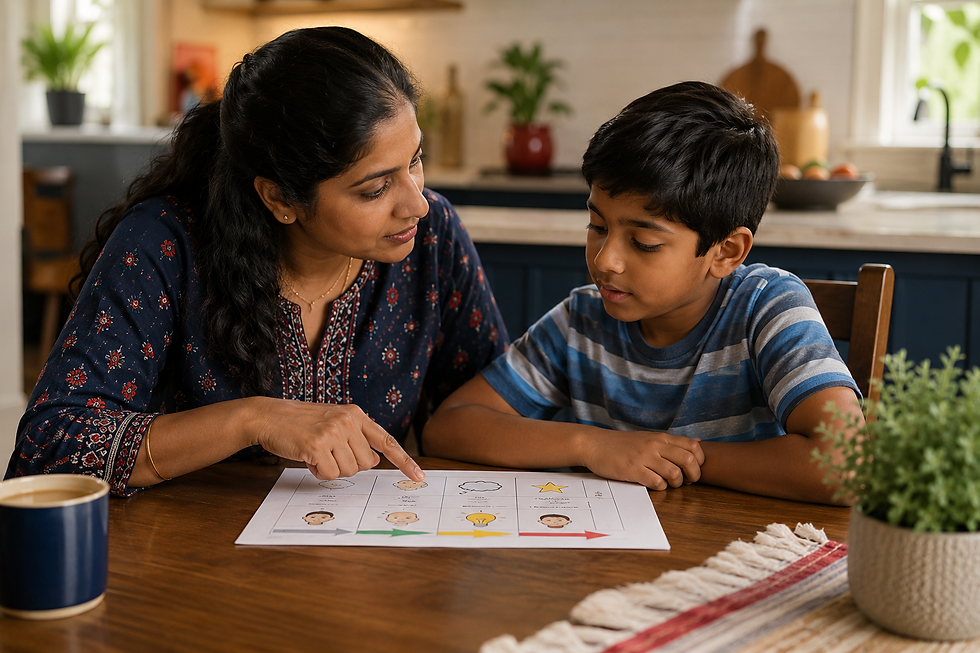
Many Parents Use These Words Interchangeably
Most parents want the same thing when their child makes a poor choice.
They want their child to learn.
They want them to develop responsibility, respect, self-control, and good decision-making skills.
Yet many parents unknowingly approach these goals through punishment when what they truly want is discipline.
The confusion is understandable.
The words are often used as if they mean the same thing.
Parents may say:
"My child needs discipline."
But what they actually mean is:
"I need my child to learn something from this situation."
That distinction matters.
Because discipline and punishment have very different goals.
One focuses on teaching.
The other focuses on stopping behavior.
Understanding the difference can completely change how children learn from mistakes and how parents respond to challenging situations.
What Does Discipline Actually Mean?
Many people are surprised to learn that the word discipline comes from a Latin word meaning "to teach" or "to instruct."
At its core, discipline is about learning.
The purpose of discipline is not to make a child suffer because they made a mistake.
The purpose is to help them develop skills.

The True Purpose of Discipline
Effective discipline helps children understand:
What happened
Why it happened
How their choices affected others
What they can do differently next time
The focus is growth.
Not punishment.
Not shame.
Not fear.
Growth.
Why Teaching Matters More Than Compliance
Many children can be forced into compliance.
But compliance is not the same thing as understanding.
A child may stop a behavior because they are afraid of consequences.
That does not mean they have learned the skill needed to make a better choice next time.
Discipline focuses on long-term development rather than short-term obedience.
What Is Punishment?
Punishment focuses primarily on stopping unwanted behavior.
The goal is often immediate compliance.
Parents may use punishment because they are frustrated, overwhelmed, worried, or simply trying to stop a behavior quickly.
How Punishment Attempts to Change Behavior
Common examples include:
Yelling
Threats
Harsh consequences
Public embarrassment
Excessive restrictions
Shame-based responses
Punishment attempts to create discomfort in response to behavior.
The hope is that the discomfort will discourage the child from repeating the action.
Why Punishment Often Produces Short-Term Results
Punishment can sometimes appear effective because it creates immediate compliance.
The behavior stops.
The child listens.
The situation becomes quieter.
But beneath the surface, learning may not actually be taking place.
The child may simply be focused on avoiding consequences.
The Goal of Discipline Is Teaching
Children are not born knowing how to:
Manage emotions
Solve problems
Handle disappointment
Communicate respectfully
Cooperate consistently
Make responsible decisions
These skills must be taught.
Teaching Emotional Regulation
Many behavioral challenges occur when emotions become overwhelming.
Children who are angry, frustrated, disappointed, or overstimulated often struggle to make good decisions.
As discussed in → Understanding Big Emotions in Children: Why Kids Melt Down and How Parents Can Help, emotional regulation is a developmental skill that requires time and support.
Discipline helps children learn how to navigate those emotions.
Teaching Problem-Solving Skills
When mistakes happen, discipline encourages children to think through solutions.
Questions such as:
What happened?
What could you do differently next time?
How can you fix this?
help children develop critical thinking skills.
Teaching Responsibility
Responsibility grows when children understand the connection between choices and outcomes.
This process takes practice.
As discussed in → Why Children Need Repetition to Learn New Skills, repeated learning opportunities are essential for growth.
Children often need far more practice than adults expect.
Why Punishment Often Fails to Create Long-Term Change
Punishment may stop a behavior temporarily.
But stopping behavior is not always the same as creating lasting change.
Fear Versus Understanding
When children fear consequences, they often focus on avoiding punishment rather than
understanding their actions.
Their attention shifts to:
"How do I avoid getting caught?"
instead of:
"How can I make a better choice?"
Compliance Versus Learning
A child who complies out of fear may behave appropriately while supervision is present.
But long-term success depends on internal motivation and understanding.
Discipline helps children develop both.
The Hidden Costs of Punishment
Over time, punishment can sometimes lead to:
Increased anxiety
Resentment
Dishonesty
Reduced communication
Power struggles
This does not mean consequences are harmful.
It means the purpose behind the response matters.

The Role of Emotional Regulation
Many parenting challenges are connected to emotional regulation.
Children frequently struggle with behavior when they are:
Tired
Hungry
Overstimulated
Frustrated
Anxious
Overwhelmed
Why Children Misbehave When Emotions Take Over
When emotions become intense, a child's thinking brain becomes less effective.
They are often reacting rather than reasoning.
This is one reason punishment tends to be ineffective during emotional outbursts.
Teaching Before Correcting
Children are most likely to learn after they have calmed down.
Parents who focus first on regulation and then on teaching often see better long-term results.
This approach creates opportunities for growth rather than power struggles.
Understanding Consequences
One of the biggest misconceptions about positive discipline is that consequences disappear.
They do not.
Consequences can be powerful teaching tools when used effectively.
Natural Consequences
Natural consequences occur without adult intervention.
For example:
A child forgets their jacket and feels cold outside.
The experience itself becomes the lesson.
Logical Consequences
Logical consequences are directly connected to the behavior.
For example:
If a child spills paint intentionally, helping clean up the mess becomes part of the learning process.
When Consequences Become Punishment
Consequences become punishment when they are disconnected, excessive, or focused primarily on creating suffering rather than learning.
The goal should always be teaching.
Common Discipline Mistakes Parents Make
Even the most caring and committed parents make discipline mistakes.
Parenting is demanding, emotional, and often happens in real time with very little opportunity to pause and think.
The goal is not perfection.
The goal is awareness.
When parents understand common discipline mistakes, they can make small adjustments that lead to better outcomes for both themselves and their children.
Expecting Too Much Too Soon
One of the most common parenting frustrations occurs when expectations exceed a child's developmental abilities.
Parents often find themselves thinking:
"We've talked about this already."
"They know better."
"Why am I still reminding them?"
The answer is often simple.
Learning takes time.
Children need repeated opportunities to practice new skills before those skills become habits.
As discussed in → Why Children Need Repetition to Learn New Skills, development is rarely a straight line. Progress often involves mistakes, setbacks, and continued learning.
Reacting Emotionally
When parents are tired, stressed, overwhelmed, or emotionally depleted, discipline can quickly become reactive.
Instead of teaching, parents may find themselves:
Raising their voice
Making threats
Giving consequences they later regret
Escalating the situation
This is completely understandable.
Parenting is emotional work.
Parents who struggle with this challenge may also benefit from → Why Some Parenting Moments Feel Bigger Than They Should.
Inconsistency
Children learn best when expectations remain predictable.
If rules change constantly, children often become confused about what is expected.
Consistency helps children feel secure and understand boundaries more clearly.
Focusing Only on the Behavior
Behavior is important.
But behavior is often the visible symptom of something deeper.
Children may struggle because they are:
Tired
Hungry
Frustrated
Overwhelmed
Seeking connection
Lacking a specific skill
Parents who look beyond the behavior are often better able to identify what their child actually needs.

What Effective Discipline Looks Like in Everyday Life
Understanding discipline is one thing.
Applying it in real life is another.
Let's look at some common situations.
When Your Child Refuses to Listen
A child ignores repeated requests to put away their toys.
Punishment might sound like:
"Fine. I'm taking all your toys away."
Discipline might sound like:
"Let's talk about what needs to happen before we move on to the next activity."
The goal is not simply compliance.
The goal is helping the child understand expectations and develop responsibility.
Parents navigating frequent resistance may find additional support in → What to Do When Your Child Says "No" to Everything.
When Your Child Has a Tantrum
A child becomes overwhelmed and starts screaming.
Punishment might focus on stopping the noise.
Discipline focuses on helping the child regulate first and learn later.
When children are emotionally flooded, they are often incapable of meaningful learning.
As discussed in → How to Handle Tantrums Without Yelling, calm guidance is often far more effective than escalating the situation.
When Your Child Makes a Mistake
Mistakes create some of the best learning opportunities.
Instead of immediately asking:
"How should I punish this?"
Parents can ask:
"What can my child learn from this?"
That simple shift changes the entire interaction.
When Siblings Are Fighting
Sibling conflict is another opportunity to teach.
Instead of immediately assigning blame, parents can help children practice:
Communication
Problem-solving
Listening
Empathy
Conflict resolution
These are life skills that will benefit children long after childhood.
Building Connection While Maintaining Boundaries
One of the biggest misconceptions about positive discipline is that it means being permissive.
It does not.
Children need boundaries.
They need structure.
They need expectations.
What they do not need is fear.
Effective discipline combines accountability with connection.
Why Children Need Both Structure and Safety
Children thrive when they know:
What is expected of them
What happens when mistakes occur
That they are still loved and supported
Structure without connection can feel harsh.
Connection without structure can feel confusing.
Children benefit most when they experience both.
The Connection Before Correction Principle
Before children can learn, they often need to feel safe.
This does not mean ignoring behavior.
It means recognizing that emotional safety creates the foundation for learning.
When children feel understood, they are more likely to listen, reflect, and grow.

Raising Confident Children Through Guidance and Growth
Every child will make mistakes.
Every child will test limits.
Every child will experience moments of frustration, poor judgment, and emotional overwhelm.
Those moments are not failures.
They are opportunities.
Opportunities to teach.
Opportunities to connect.
Opportunities to help children build skills that will serve them throughout life.
Discipline is not about controlling children.
It is about guiding them.
It is about helping them develop responsibility, emotional regulation, problem-solving abilities, and confidence.
When parents focus on teaching rather than punishing, they create an environment where children feel safe enough to learn from mistakes and capable enough to grow beyond them.
At Building Bright Futures, we believe parents deserve practical support, real-world strategies, and access to resources that strengthen family relationships.
Through our parent coaching services, family support programs, parenting workshops, community partnerships, and educational resources, we help families build the skills and confidence needed to navigate everyday parenting challenges.
Whether you're working through tantrums, bedtime struggles, emotional regulation challenges, discipline concerns, or communication difficulties, Building Bright Futures is here to support your family's journey.
Explore our parenting workshops, family support services, and community-based programs to discover how we can help you build a brighter future for your family.
Key Takeaways
Discipline and punishment are not the same thing.
Discipline focuses on teaching while punishment focuses on stopping behavior.
Children learn best when they understand the reasons behind expectations.
Emotional regulation is a skill that must be taught and practiced.
Consequences can be effective when they are logical, connected, and focused on learning.
Punishment may create short-term compliance but does not always create long-term understanding.
Consistency, connection, and clear expectations help children learn more effectively.
Children often need repetition before new skills become habits.
Effective discipline combines accountability with emotional safety.
The ultimate goal of discipline is helping children develop skills they can carry into adulthood.
Frequently Asked Questions
What is the difference between discipline and punishment?
Discipline focuses on teaching children skills, responsibility, and better decision-making. Punishment focuses on creating consequences intended to stop unwanted behavior.
Does discipline mean there are no consequences?
No. Effective discipline often includes natural and logical consequences. The difference is that the consequence is intended to teach rather than simply create discomfort.
Is punishment always harmful?
Not necessarily. However, punishment alone often fails to teach the underlying skills children need to make better choices in the future.
How can I discipline without yelling?
Start by regulating your own emotions first. Children learn best when adults remain calm and focused on teaching rather than reacting. You may also find value in → How Parents Can Stay Calm During Stressful Parenting Moments.
What should I do when my child repeats the same mistake?
Remember that learning takes repetition. Most skills require practice over time. Consistent teaching and guidance are often more effective than increasing punishment.
What if my child does not seem to care about consequences?
This may indicate that the issue is not motivation but a missing skill, emotional overwhelm, or developmental challenge. Looking beyond the behavior can often reveal what support your child truly needs.
Can discipline strengthen my relationship with my child?
Yes. When discipline focuses on teaching, connection, and problem-solving, it can strengthen trust and improve communication between parents and children.
At what age should discipline begin?
Discipline begins as soon as children start learning expectations and boundaries. The strategies used should always be age-appropriate and focused on teaching rather than punishment.


Comments