
Helping Children Talk About Their Feelings: A Parent’s Guide to Building Safe Emotional Communication

Updated: May 7

Why Some Children Cry, Shut Down, or Explode Instead of Talking
Many parents recognize the moment instantly.
Your child walks away instead of answering. They suddenly yell over something small.
They burst into tears but cannot explain why. They say:
“I don’t know.”
Or maybe they refuse to talk at all.
For parents, these moments can feel confusing, frustrating, and sometimes even heartbreaking. You want to help your child. You want to understand what is happening internally. But instead of words, you are met with silence, anger, withdrawal, or emotional outbursts.
Many parents quietly wonder:
Why won’t my child open up emotionally?
Why does my child cry instead of talk?
Is something wrong?
Am I handling this the wrong way?
Why do small situations become such big emotional reactions?
The truth is reassuring:
Most children are not refusing to communicate because they are defiant, manipulative, or intentionally difficult.
More often, children are struggling because emotional communication is a developmental skill.
Children experience powerful emotions long before they fully understand what those emotions are, how to regulate them, or how to explain them to someone else.
That means many emotional reactions that look like “bad behavior” are actually signs that a child does not yet have the tools to communicate what they are experiencing internally.
At Building Bright Futures, we help families understand that emotional communication is not something children simply “figure out.” It develops gradually through connection, modeling, emotional safety, trust, and consistent support.
And when children feel safe expressing emotions, something important begins to happen.
They become more resilient. They develop stronger relationships. They build emotional intelligence. They learn healthy coping skills. And perhaps most importantly, they learn they do not have to navigate difficult emotions alone.
This guide will help parents understand:
why children struggle to express emotions
what emotional communication looks like at different ages
how to help children build emotional vocabulary
how to respond when emotions become behaviors
how to create emotional safety at home
what to do when children shut down emotionally
how emotional communication supports long-term emotional health
Because helping children talk about their feelings is not just about reducing meltdowns.
It is about helping children understand themselves.
Why Emotional Communication Matters So Much in Childhood
Children experience emotions intensely.
Frustration. Fear. Embarrassment. Excitement. Jealousy. Disappointment. Sadness.
Overwhelm.
And often, several emotions exist at the same time.
The challenge is that children usually feel emotions before they can organize, regulate, or communicate them.
That is why emotions often appear through:
tantrums
shutting down
crying
aggression
clinginess
irritability
withdrawal
refusal
emotional explosions
This is especially true during periods of stress, transitions, overstimulation, or emotional overload.
Parents who have read → Understanding Big Emotions in Children: Why Kids Melt Down and How Parents Can Help already know that emotional outbursts are often signs of nervous system overwhelm rather than intentional misbehavior.
Communication is deeply connected to regulation.
Children who cannot explain emotions often express them physically or behaviorally instead.
That is why emotional communication matters so much.
When children learn how to identify, name, and safely express emotions, they begin developing:
emotional intelligence
resilience
self-awareness
problem-solving skills
relationship skills
emotional regulation abilities
confidence in asking for help
Children who feel emotionally heard are also more likely to:
seek support when struggling
communicate openly with parents later in life
manage conflict more effectively
build stronger social relationships
develop healthier coping strategies
Emotional communication is not just about childhood.
It becomes part of lifelong mental and emotional health.
Why Children Often Struggle to Express Their Feelings
Many adults assume that if a child is upset, they should simply explain what is wrong.
But emotional communication is actually one of the most complex developmental skills children learn.
Several things make this difficult.
1. Children Often Lack Emotional Vocabulary
Young children usually begin with only a few emotional words:
happy
sad
mad
scared
But emotional experiences are much more complex than that.
A child may actually be feeling:
embarrassed
overwhelmed
disappointed
excluded
anxious
frustrated
overstimulated
rejected
Without the language to describe these experiences, emotions often become behaviors instead.
This is one reason articles like → Helping Kids Name Feelings When They Don’t Have the Words are so important within emotional development.
Children cannot communicate emotions clearly if they do not yet have the words.
2. The Emotional Brain Develops Earlier Than the Logical Brain
Children feel emotions intensely because the emotional centers of the brain develop earlier than the parts responsible for:
reasoning
impulse control
emotional regulation
communication
perspective-taking
This means children often feel more than they can explain.
When children become emotionally overwhelmed, the brain’s stress response can temporarily reduce their ability to communicate logically.
In those moments, expecting calm explanations is unrealistic.
Children first need support regulating their nervous systems.
3. Some Children Fear Emotional Reactions
Children are highly sensitive to how adults respond emotionally.
If children believe certain emotions are “bad,” inconvenient, dramatic, or unsafe, they may begin hiding those feelings.
For example, children may learn to suppress emotions if they regularly hear:
“Stop crying.”
“You’re fine.”
“Calm down.”
“That’s not a big deal.”
“You’re overreacting.”
Even well-intentioned responses can accidentally communicate:
“Your emotions are too much.”
Over time, children may stop sharing emotions openly.
4. Some Children Communicate Emotions Through Behavior Instead of Words
Children often express emotions indirectly.
A child who seems angry may actually feel:
anxious
embarrassed
lonely
overstimulated
rejected
A child who refuses to talk may feel emotionally flooded.
A child who suddenly melts down after school may have spent all day holding emotions together internally.
This is why articles like → After-School Meltdowns: What’s Really Going On (and How to Help) resonate so strongly with parents.
Children often release emotions where they feel safest.
Why Some Children Cry, Shut Down, or Explode Instead of Talking
Many parents recognize the moment instantly.
Your child walks away instead of answering. They suddenly yell over something small.
They burst into tears but cannot explain why. They say:
“I don’t know.”
Or maybe they refuse to talk at all.
For parents, these moments can feel confusing, frustrating, and sometimes even heartbreaking. You want to help your child. You want to understand what is happening internally. But instead of words, you are met with silence, anger, withdrawal, or emotional outbursts.
Many parents quietly wonder:
Why won’t my child open up emotionally?
Why does my child cry instead of talk?
Is something wrong?
Am I handling this the wrong way?
Why do small situations become such big emotional reactions?
The truth is reassuring:
Most children are not refusing to communicate because they are defiant, manipulative, or intentionally difficult.
More often, children are struggling because emotional communication is a developmental skill.
Children experience powerful emotions long before they fully understand what those emotions are, how to regulate them, or how to explain them to someone else.
That means many emotional reactions that look like “bad behavior” are actually signs that a child does not yet have the tools to communicate what they are experiencing internally.
At Building Bright Futures, we help families understand that emotional communication is not something children simply “figure out.” It develops gradually through connection, modeling, emotional safety, trust, and consistent support.
And when children feel safe expressing emotions, something important begins to happen.
They become more resilient. They develop stronger relationships. They build emotional intelligence. They learn healthy coping skills. And perhaps most importantly, they learn they do not have to navigate difficult emotions alone.
This guide will help parents understand:
why children struggle to express emotions
what emotional communication looks like at different ages
how to help children build emotional vocabulary
how to respond when emotions become behaviors
how to create emotional safety at home
what to do when children shut down emotionally
how emotional communication supports long-term emotional health
Because helping children talk about their feelings is not just about reducing meltdowns.
It is about helping children understand themselves.

Why Emotional Communication Matters So Much in Childhood
Children experience emotions intensely.
Frustration. Fear. Embarrassment. Excitement. Jealousy. Disappointment. Sadness.
Overwhelm.
And often, several emotions exist at the same time.
The challenge is that children usually feel emotions before they can organize, regulate, or communicate them.
That is why emotions often appear through:
tantrums
shutting down
crying
aggression
clinginess
irritability
withdrawal
refusal
emotional explosions
This is especially true during periods of stress, transitions, overstimulation, or emotional overload.
Parents who have read → Understanding Big Emotions in Children: Why Kids Melt Down and How Parents Can Help already know that emotional outbursts are often signs of nervous system overwhelm rather than intentional misbehavior.
Communication is deeply connected to regulation.
Children who cannot explain emotions often express them physically or behaviorally instead.
That is why emotional communication matters so much.
When children learn how to identify, name, and safely express emotions, they begin developing:
emotional intelligence
resilience
self-awareness
problem-solving skills
relationship skills
emotional regulation abilities
confidence in asking for help
Children who feel emotionally heard are also more likely to:
seek support when struggling
communicate openly with parents later in life
manage conflict more effectively
build stronger social relationships
develop healthier coping strategies
Emotional communication is not just about childhood.
It becomes part of lifelong mental and emotional health.
Why Children Often Struggle to Express Their Feelings
Many adults assume that if a child is upset, they should simply explain what is wrong.
But emotional communication is actually one of the most complex developmental skills children learn.
Several things make this difficult.
1. Children Often Lack Emotional Vocabulary
Young children usually begin with only a few emotional words:
happy
sad
mad
scared
But emotional experiences are much more complex than that.
A child may actually be feeling:
embarrassed
overwhelmed
disappointed
excluded
anxious
frustrated
overstimulated
rejected
Without the language to describe these experiences, emotions often become behaviors instead.
This is one reason articles like → Helping Kids Name Feelings When They Don’t Have the Words are so important within emotional development.
Children cannot communicate emotions clearly if they do not yet have the words.
2. The Emotional Brain Develops Earlier Than the Logical Brain
Children feel emotions intensely because the emotional centers of the brain develop earlier than the parts responsible for:
reasoning
impulse control
emotional regulation
communication
perspective-taking
This means children often feel more than they can explain.
When children become emotionally overwhelmed, the brain’s stress response can temporarily reduce their ability to communicate logically.
In those moments, expecting calm explanations is unrealistic.
Children first need support regulating their nervous systems.
3. Some Children Fear Emotional Reactions
Children are highly sensitive to how adults respond emotionally.
If children believe certain emotions are “bad,” inconvenient, dramatic, or unsafe, they may begin hiding those feelings.
For example, children may learn to suppress emotions if they regularly hear:
“Stop crying.”
“You’re fine.”
“Calm down.”
“That’s not a big deal.”
“You’re overreacting.”
Even well-intentioned responses can accidentally communicate:
“Your emotions are too much.”
Over time, children may stop sharing emotions openly.
4. Some Children Communicate Emotions Through Behavior Instead of Words
Children often express emotions indirectly.
A child who seems angry may actually feel:
anxious
embarrassed
lonely
overstimulated
rejected
A child who refuses to talk may feel emotionally flooded.
A child who suddenly melts down after school may have spent all day holding emotions together internally.
This is why articles like → After-School Meltdowns: What’s Really Going On (and How to Help) resonate so strongly with parents.
Children often release emotions where they feel safest.
Signs Your Child May Be Struggling to Express Emotions
Some children communicate emotions openly.
Others struggle quietly.
Signs may include:
shutting down emotionally
saying “I don’t know” frequently
avoiding conversations about feelings
becoming aggressive during frustration
crying over seemingly small things
emotional explosions after school
stomachaches or headaches during stress
withdrawing socially
becoming clingy
sudden irritability
difficulty calming down
emotional reactions that seem larger than the situation itself
These signs do not automatically mean something is wrong.
They often signal that a child needs more support understanding and expressing internal experiences.
Parents who notice frequent emotional overwhelm may also benefit from reading
Stress and emotional communication are deeply connected.
Emotional Communication Looks Different at Different Ages
One of the biggest mistakes adults make is expecting emotional communication to look the same at every developmental stage.
Children communicate emotions differently as they grow.
Toddlers (Ages 1–3)
Toddlers experience very big emotions with very limited language.
At this age, emotional communication often looks like:
crying
tantrums
throwing objects
clinginess
screaming
hitting
running away
Toddlers are not being manipulative.
They are overwhelmed.
At this stage, children need:
emotional naming
calm co-regulation
predictable routines
emotional modeling
simple emotional language
Parents supporting toddlers often benefit from → Tantrums Explained: What’s Happening in the Toddler Brain.
Preschoolers (Ages 3–5)
Preschoolers begin developing stronger emotional awareness but still struggle with regulation.
At this stage children may:
identify basic feelings
struggle with frustration tolerance
become emotionally reactive during transitions
experience emotional flooding quickly
need help understanding social emotions
This is often when parents begin noticing patterns involving:
transition meltdowns
emotional rigidity
intense reactions to disappointment
Helpful related resources include:
→ Helping Kids Handle Transitions Without Meltdowns → Why Some Children Struggle More with Transitions Than Others
Early Elementary Children
School-aged children usually develop more emotional language but may still struggle expressing vulnerable emotions.
Children at this age often hide:
embarrassment
anxiety
fear of failure
social worries
shame
Instead of talking openly, emotions may appear as:
irritability
perfectionism
withdrawal
emotional shutdown
acting out at home
This is why emotional safety becomes especially important during early school years.
Older Children
Older children may understand emotions intellectually but still struggle expressing them openly.
At this stage, trust becomes critical.
Children are more likely to communicate when they believe:
they will not be judged
they will not immediately get in trouble
their feelings will be respected
their parents will stay calm
Open communication during these years helps build stronger long-term parent-child relationships.

The Foundation of Emotional Communication: Emotional Safety
Before children openly express emotions, they need emotional safety.
Emotional safety means a child believes:
their emotions are allowed
their feelings matter
they can express difficult emotions without rejection
they will be listened to respectfully
mistakes will not destroy connection
Emotional safety does NOT mean:
no boundaries
no consequences
permissive parenting
It means emotions themselves are not treated as dangerous.
Children are extremely sensitive to adult emotional responses.
For example:
A child says:
“I’m scared to go to school.”
An adult response like:
“There’s nothing to be scared of.”
may unintentionally communicate:
“Your feelings are wrong.”
A more emotionally safe response sounds like:
“That sounds really uncomfortable. Want to tell me more about what feels scary?”
The difference is enormous.
One response closes communication. The other opens it.
Parents working on emotional safety often benefit from → What Kids Really Need When They’re Dysregulated.
Because emotional regulation grows best inside emotionally safe relationships.
Listening Is More Powerful Than Fixing
One of the biggest shifts parents can make is learning to listen before solving.
Most adults naturally move into:
advice
correction
reassurance
problem solving
But children often need emotional connection before solutions.
Children who feel heard become more emotionally open over time.

Simple Listening Strategies That Help Children Open Up
Lower Yourself Physically
Sit beside children. Kneel. Lean in.
This creates emotional connection.
Reflect Feelings Back
Instead of correcting emotions, acknowledge them.
Examples:
“That sounds frustrating.”
“You felt really disappointed.”
“I can see why that upset you.”
This teaches emotional language while validating experience.
Allow Silence
Children often need time to organize thoughts.
Adults frequently interrupt emotional processing accidentally by talking too quickly.
Silence creates space.
Avoid Emotional Dismissal
Try reducing phrases like:
“You’re fine.”
“It’s not a big deal.”
“Stop crying.”
“You’re okay.”
Even loving reassurance can unintentionally shut communication down.
Helping Children Build Emotional Vocabulary
Children cannot communicate emotions clearly without emotional language.
That means emotional vocabulary must be taught intentionally.
Practical Ways to Build Emotional Vocabulary
Model Emotional Language Yourself
Instead of saying:
“That day was stressful.”
Try:
“I felt overwhelmed during my meeting today.”
Children learn emotional language by hearing it used naturally.
Use Books and Stories
Ask questions like:
“How do you think they felt?”
“Why do you think they reacted that way?”
“What emotion do you think was underneath that behavior?”
Stories create safe emotional learning opportunities.
Expand Emotional Language Gradually
If children say:
“I’m mad.”
Parents can gently explore deeper emotional meaning:
“Do you think you felt frustrated, disappointed, embarrassed, or left out?”
This expands emotional awareness.
Normalize Emotional Conversations Daily
The more emotions are discussed casually, the safer emotional communication feels.
This is one reason routines matter so much.
Parents wanting to strengthen emotional predictability may also benefit from:
→ How to Build Healthy Routines That Reduce Stress for Kids Predictability helps emotional communication flourish.
When Big Emotions Become Big Behaviors
Children often communicate emotions behaviorally before they can communicate verbally.
That means:
yelling
hitting
slamming doors
refusal
withdrawal
crying
shutting down
are often emotional signals.
This does NOT mean boundaries disappear.
Behavior still matters.
But emotional understanding changes how parents respond.
Instead of asking:
“How do I stop this behavior?”
parents can begin asking:
“What emotion may be underneath this reaction?”
This shift changes everything.
A child throwing toys may feel:
powerless
overstimulated
rejected
emotionally flooded
A child yelling may feel:
unheard
anxious
embarrassed
emotionally unsafe
Parents can acknowledge emotion while still maintaining boundaries.
Example:
“I can see you’re really angry right now. It’s okay to feel angry, but it’s not okay to throw toys. Let’s figure out another way to show what you’re feeling.”
This approach teaches:
emotions are allowed
unsafe behavior is not
emotional communication is possible
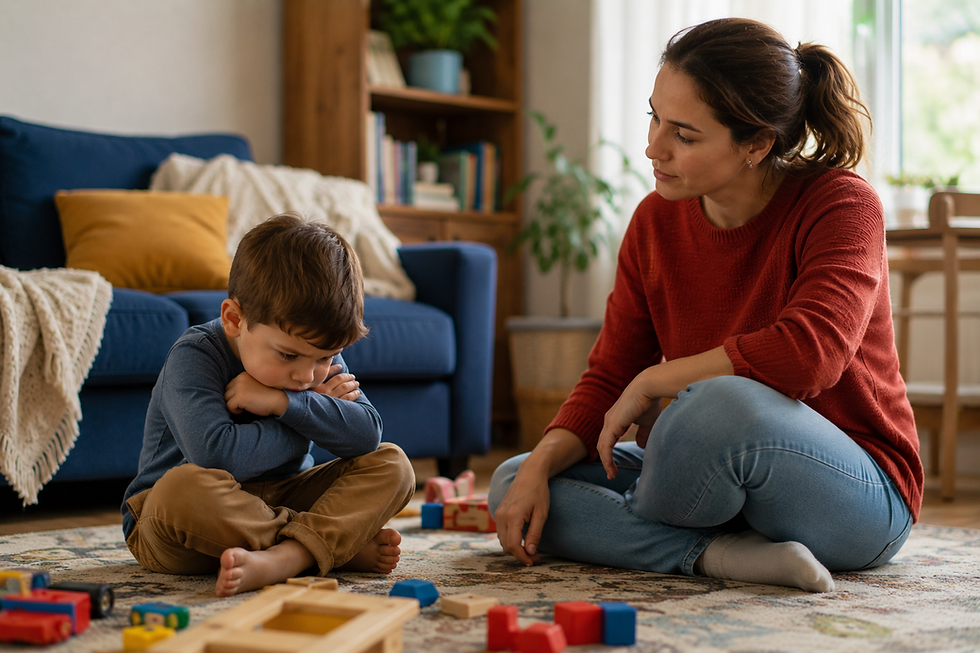
The 5-Step Emotional Communication Process for Parents
One of the most effective ways to help children express emotions is using a predictable communication framework.
Step 1: Pause Before Correcting
Children communicate better when adults remain calm.
Parents who become emotionally escalated often unintentionally increase emotional flooding.
If staying calm feels difficult, → How Parents Can Stay Calm During Stressful Parenting
Moments offers additional support strategies.
Step 2: Name the Emotion
Children need help identifying emotional experiences.
Examples:
“That felt disappointing.”
“You seem frustrated.”
“I wonder if you felt embarrassed.”
Step 3: Validate the Feeling
Validation does NOT mean agreement.
It means acknowledging emotional reality.
Examples:
“That makes sense.”
“I understand why that upset you.”
“That felt really hard.”
Step 4: Regulate Before Problem Solving
Children cannot communicate effectively while emotionally flooded.
Calm nervous systems first.
Then talk.
This connects closely to → Calm-Down Strategies That Actually Work for Young Children.
Step 5: Explore Solutions Together
Once regulated, children can begin reflecting.
Questions might include:
“What felt hardest?”
“What do you think you needed?”
“What could help next time?”
This teaches emotional awareness and problem solving simultaneously.

Creating Daily Opportunities for Emotional Conversations
Children are more likely to open up emotionally when conversations happen consistently — not only during conflict.
Some of the best emotional conversations happen during:
car rides
bedtime
walks
meals
play
quiet routines
These moments feel less pressured.
Better Emotional Questions for Kids
Instead of:
“How was your day?”
Try:
“What made you smile today?”
“What felt hard today?”
“Did anything feel frustrating?”
“What surprised you today?”
“When did you feel proud today?”
Parents looking for more communication prompts may also enjoy:
These questions create emotional reflection naturally.
Trust Is the Real Foundation of Communication
Children communicate more openly when they trust:
they will be emotionally safe
they will not immediately be judged
their emotions will not overwhelm the relationship
their parents can handle difficult feelings calmly
Trust develops slowly through repeated experiences.
Every supportive emotional interaction strengthens the parent-child relationship.
And every emotionally safe conversation teaches children:
“My feelings matter.”
What to Do When Your Child Refuses to Talk
Some children process emotions internally.
Pushing harder usually backfires.
Instead:
stay emotionally available
reduce pressure
focus on connection first
allow nonverbal expression
revisit conversations later
Children often communicate indirectly through:
drawing
storytelling
play
movement
humor
behavior patterns
Communication does not always begin with direct verbal conversations.
Supporting Children During Emotional Overwhelm
When emotions become intense, the goal is not immediate correction.
The goal is regulation.
Children who are emotionally flooded cannot access logical thinking effectively.
Parents can help by:
lowering their voice
slowing down
remaining physically present
offering reassurance
reducing stimulation
helping children breathe slowly
Only AFTER regulation should deeper conversations happen.
This is one reason → What to Do After You Lose Your Patience as a Parent matters so much.
Repair and reconnection remain part of emotional safety.

When Additional Support May Help
Sometimes children need more support navigating emotions.
Parents may want additional guidance if children frequently experience:
severe emotional overwhelm
persistent anxiety
emotional shutdown
ongoing aggression
prolonged sadness
difficulty functioning socially or academically
Seeking support is not failure.
It is responsive parenting.
Organizations like Building Bright Futures exist to support families through:
parenting workshops
emotional development education
support groups
community resources
emotional regulation guidance
Parents do not have to navigate emotional development alone.
The Long-Term Impact of Emotional Communication
Helping children talk about feelings affects far more than childhood behavior.
Children who develop emotional communication skills often become:
more resilient
more self-aware
better problem solvers
stronger communicators
healthier relationship builders
more confident asking for help
Most importantly, emotionally supported children learn:
Their feelings are not dangerous.
And they are not alone inside difficult emotions.
That becomes the foundation for lifelong emotional health.
Helping Children Feel Safe Enough to Be Honest
Every child deserves relationships where emotions can be expressed safely.
Helping children talk about their feelings is not about creating perfect communication.
It is about creating enough emotional safety that children continue trying.
Some conversations will feel awkward. Some moments will feel messy. Some emotional reactions will still become overwhelming.
That is normal.
What matters most is consistency.
When parents respond with empathy, patience, emotional safety, and connection, children gradually learn:
emotions can be understood
difficult feelings can be managed
asking for help is safe
communication strengthens relationships
emotions do not have to stay trapped inside
These are the foundations of emotional resilience.
And those foundations shape children for life.

Common Questions Parents Ask About Emotional Communication
Why won’t my child talk about their feelings?
Many children struggle expressing emotions because emotional communication is developmental. Young children often feel emotions before they have the vocabulary or regulation skills needed to explain them clearly.
Some children also worry about disappointing adults, getting in trouble, or feeling misunderstood.
Why does my child cry instead of talk?
Crying is often a child’s nervous system communicating overwhelm. Children frequently express emotions physically before they can communicate them verbally.
Is it normal for kids to struggle expressing emotions?
Yes. Emotional communication develops gradually across childhood. Many children need direct support learning how to identify, name, and express emotions safely.
What age should children start learning emotional communication?
Children begin learning emotional communication from infancy through everyday interactions, emotional modeling, and supportive relationships.
Toddlers may identify basic emotions while older children gradually develop more complex emotional understanding.
How can I help my child open up emotionally?
Children communicate more openly when they feel emotionally safe. Listening calmly, validating emotions, reducing judgment, and creating regular emotional conversations all help strengthen communication over time.
Should I worry if my child shuts down emotionally?
Occasional emotional shutdown is normal, especially during stress or overwhelm.
However, persistent withdrawal, severe anxiety, or major behavioral changes may benefit from additional support.
Key Takeaways
Emotional communication is a developmental skill.
Children often express emotions through behavior before words.
Emotional safety is the foundation of open communication.
Listening is often more powerful than immediately fixing.
Emotional vocabulary helps children communicate internal experiences.
Regulation must come before problem solving.
Daily conversations strengthen emotional trust.
Emotional communication changes across developmental stages.
Children communicate more openly when parents remain calm and emotionally safe.
Emotional communication skills support lifelong resilience and emotional health.


Comments